
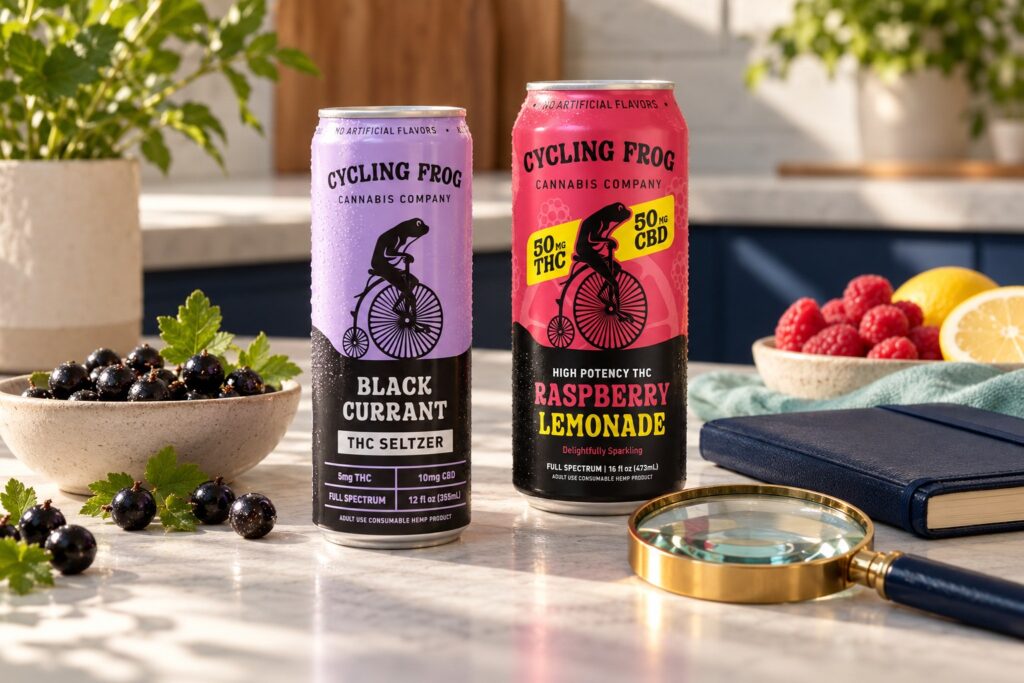
Two drinks can list the same THC amount and still have different formulations. One may include CBD; another may list CBG or CBN. Those extra initials are worth noticing, but they do not turn the can into a reliable formula for focus, sleep, or a particular mood.
Start with the named ingredients
THC, CBD, CBG, and CBN are different cannabinoids. Record the name and amount of each, plus whether that amount is per serving or per container. Avoid a single combined “cannabinoid total” when your real question is how much THC a serving contains.
For the arithmetic behind reading separate amounts, see our THC and CBD label guide. This article focuses on how to evaluate the claims made about combinations.
A ratio is a description, not a guarantee
A hypothetical label showing equal THC and CBD amounts describes a 1:1 ratio on that stated basis. It does not establish that the drink will feel balanced to everyone or that CBD cancels THC impairment.
Likewise, a CBG ingredient does not prove a focus benefit, and a CBN ingredient does not establish that the finished drink will improve sleep. Check what evidence is actually provided for the product rather than borrowing a broad claim from the ingredient’s reputation.
Be careful with the entourage-effect shortcut
The phrase entourage effect is often used to suggest that combinations work better together. That general idea does not, by itself, prove a specific benefit for a particular beverage, ratio, serving, or person. A product claim needs evidence that is relevant to the claim being made.
The National Center for Complementary and Integrative Health reviews research across cannabis and cannabinoids, including limitations in evidence. Those findings should not be treated as blanket proof for retail drinks. The FDA also distinguishes approved medicines from unapproved CBD products and their health claims.
Ask four useful shopping questions
- Which cannabinoids and amounts are listed on the current label?
- Are the figures per serving or per container?
- Does the relevant batch document support the product information?
- Is the claim about this finished product or only a general ingredient?
Caffeine, flavorings, sweeteners, and other ingredients deserve their own review. A daytime or nighttime name is not a substitute for that information.
Compare current product formulations, review available lab reports, and ask about missing details. For adults 21+. Do not drive after THC use; discuss personal health questions and medication interactions with a qualified clinician.